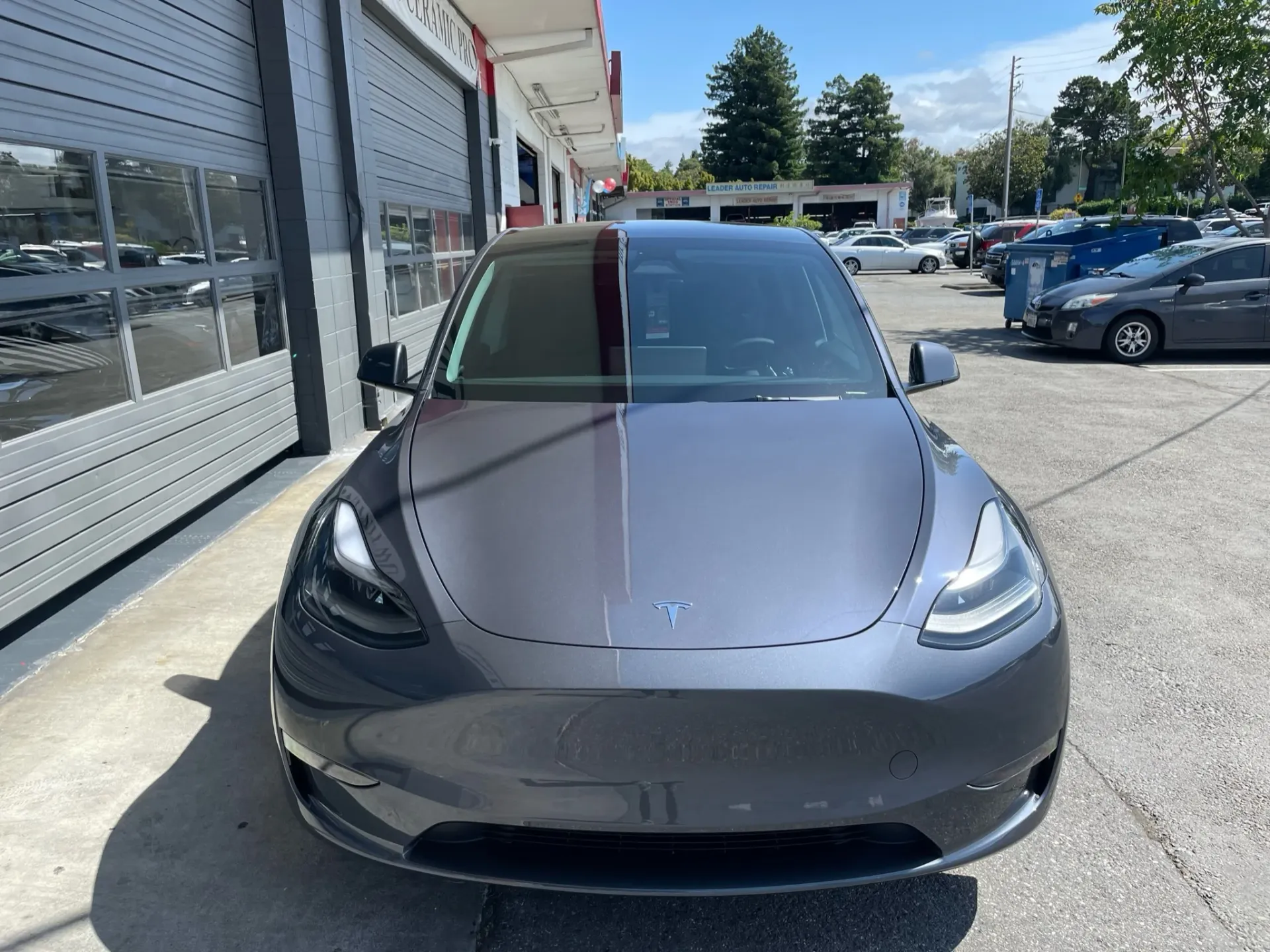
Park a Model 3 on Kiely Boulevard at noon in July, come back forty minutes later, and the steering wheel is too hot to hold. The seats radiate. The first thing you do before pulling out of the lot is crank the climate control to full and wait. Repeat that every afternoon through a South Bay summer and you are spending a measurable slice of your battery on undoing the parking lot.
Tesla's glass roof is one of the car's best features and one of its most misunderstood. It is not the reason your cabin bakes. But it is not saving you either.
UV Protection and Heat Rejection Are Not the Same Thing
Tesla's laminated glass filters the overwhelming majority of ultraviolet light. UV is what fades a dashboard, embrittles trim, and ages the skin on your left arm over a long commute. Blocking it is genuinely valuable, and the factory glass does it well.
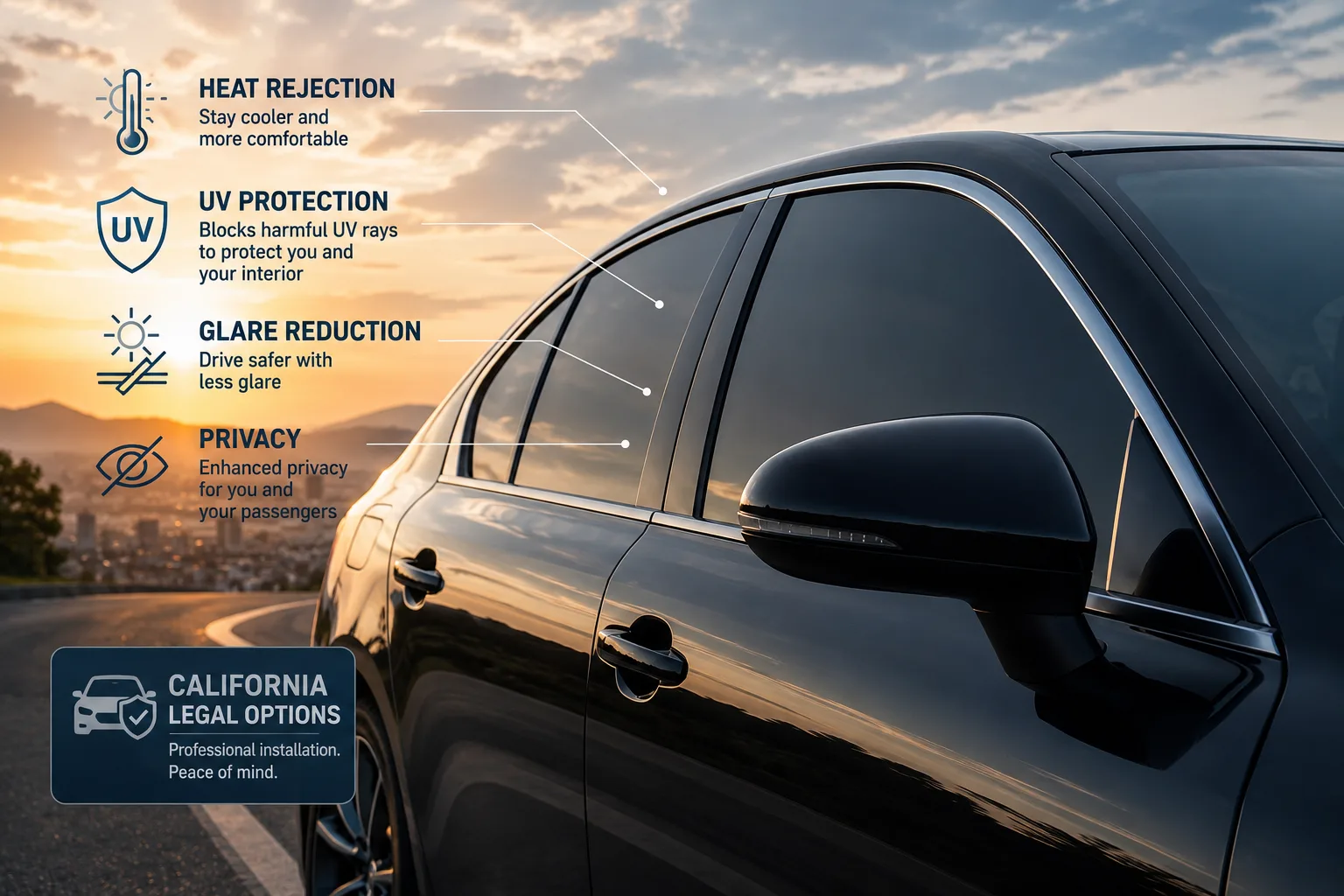
Heat is a different problem. The warmth pressing down through the roof and in through the side glass is mostly infrared radiation, and infrared sits on the opposite side of the visible spectrum from UV. Glass can stop nearly all UV and still pass a great deal of infrared straight into the cabin. That is precisely why a Model 3 with a perfectly intact factory roof still turns into an oven in a Santa Clara parking structure.
Nano-ceramic window film is engineered for that specific gap. It targets the infrared band rather than simply darkening the glass, which is what lets it cool a cabin without turning the car into a rolling cave.
What Heat Rejection Actually Does to Your Range
Climate control is the largest non-drivetrain electrical load in any EV. Every minute the compressor runs at full tilt pulling a 130-degree cabin down to something habitable is a minute it is not putting energy into the road.
Be skeptical of anyone who quotes you an exact percentage of range recovered. The honest answer is that the effect depends on your parking situation, your commute length, and how hot the week is. What quality film reliably delivers is a cabin that starts cooler, an air conditioning system that reaches your set point faster and then cycles instead of running flat out, and a car that is comfortable in the first two minutes rather than the first ten.
The comfort difference is not subtle, and on a Model 3 the roof is where you feel it first.
California's 70 Percent Rule, and What It Means for Your Front Windows
This is where most Bay Area Tesla owners get bad advice, so it is worth being precise.
- Front side windows must allow at least 70 percent of visible light through. Critically, that figure applies to the film and the factory glass together, not the film alone. Factory glass already absorbs some light before any film is applied.
- Rear side windows and the rear window may be any darkness you like, provided the vehicle has dual side mirrors.
- The windshield permits a non-reflective strip on the top four inches, or above the AS-1 line.
- Red, amber, and blue films are prohibited, as are mirrored and metallic films reflective enough to create a one-way mirror effect.
- The installing shop should provide a certificate or sticker identifying the film manufacturer.
The practical consequence is that you cannot buy front-seat comfort with darkness in California. You buy it with film quality. A near-clear ceramic film on the front doors, chosen so the combined transmission clears the 70 percent threshold, rejects a great deal of heat while looking like nothing was installed at all.
The Glass Roof Is the Upgrade Everyone Forgets
Owners fixate on the side windows and ignore the largest piece of glass on the car. On a Model 3, the roof is the single biggest heat gain surface, and it is directly above your head. Adding film there changes the character of the car on a hot day more than tinting the doors does.
It also changes how the car looks from outside, which some owners love and some do not. Ask to see a finished example before you commit.
Why Ceramic, and Not Dyed or Metallic, on a Tesla
- Dyed film is the cheapest option. It works by absorbing light, fades toward purple over a few California summers, and rejects comparatively little infrared.
- Metalized film rejects heat well but embeds a conductive metal layer in your glass. On a car whose keys, cellular connection, and navigation all depend on radio signals passing through that glass, this is a poor trade. Reflective metallic films also run into California's prohibition on mirror-effect tint.
- Carbon film holds its color, will not interfere with signals, and lands in the middle on heat rejection.
- Nano-ceramic film is non-conductive, color stable, and built specifically to reject infrared. On an EV it is the obvious choice.
What a Proper Model 3 Installation Looks Like
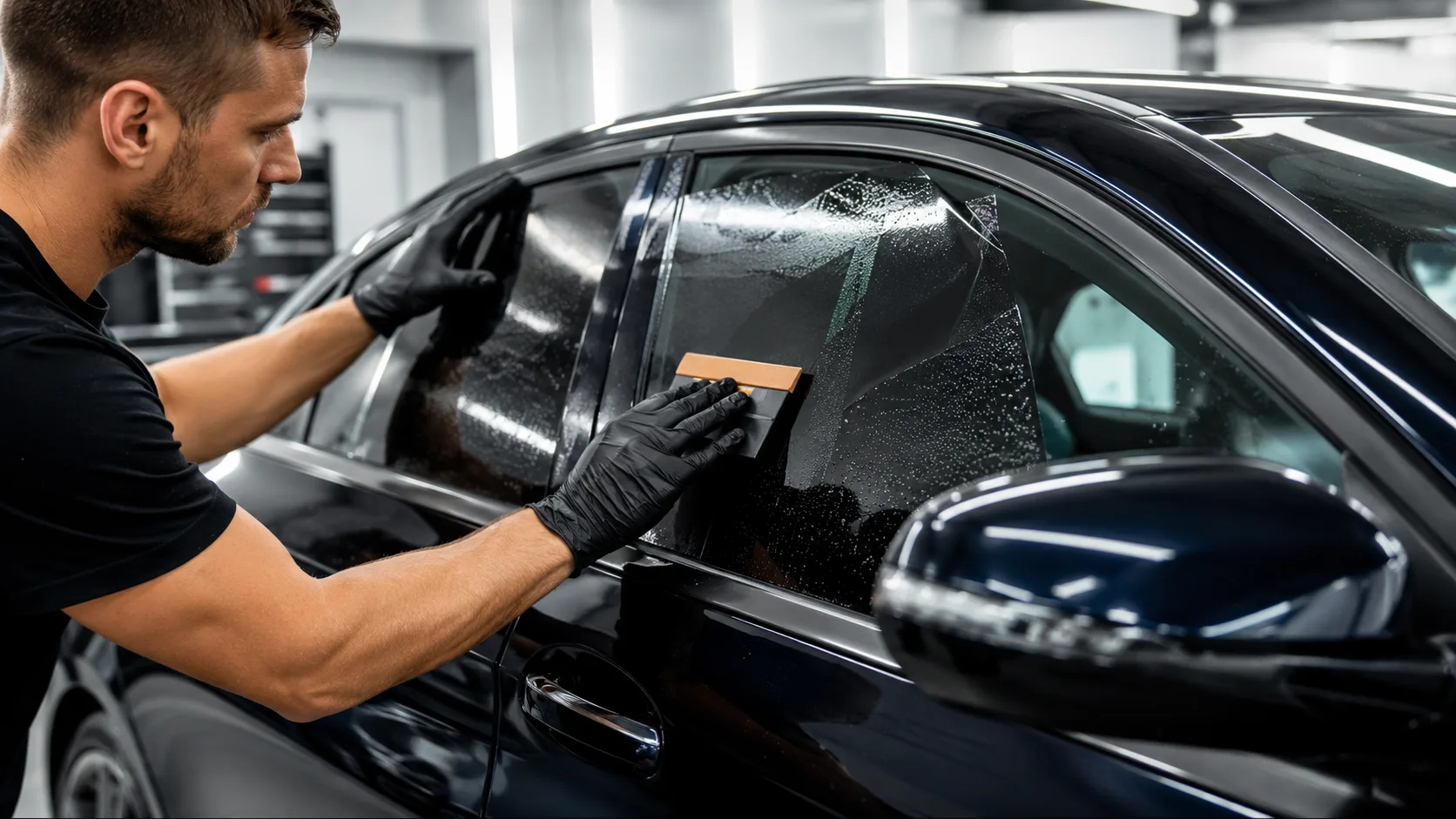
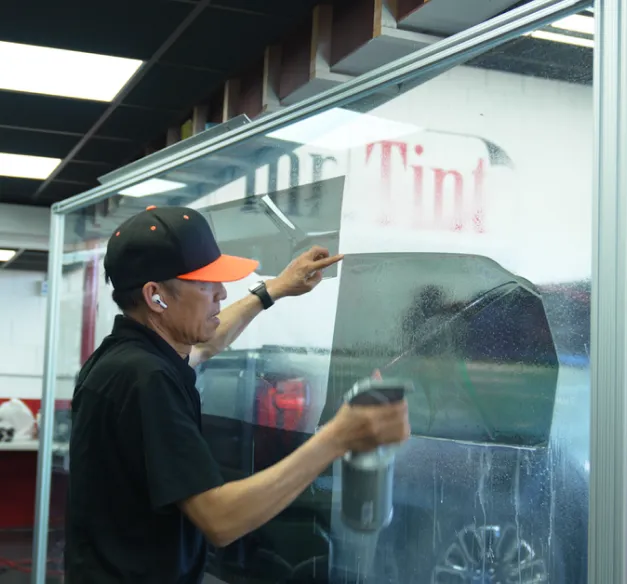
Film is only half of what you are paying for. The other half is the install. Patterns should be computer-cut for the exact model year so there are no razor blades anywhere near your glass or door seals. Edges should reach the full perimeter of the glass rather than stopping short of the frit band. Any haze or faint cloudiness in the first several days is the mounting solution evaporating, not a defect.
Leave your windows up while the film cures. In San Jose's summer heat that is usually a couple of days; your installer will give you the number for the specific film. Rolling a window down early is the most common way owners damage a fresh install.
Beat the Next Heat Wave, Not the Last One
Every South Bay tint shop books out the week the forecast first crosses one hundred degrees. The work is unhurried and the scheduling is easy in the weeks before that.
Bring your Model 3 to Mr. Tint on Kiely Boulevard and we will walk you through film options against your actual glass, confirm the front windows land on the legal side of the 70 percent rule, and quote the roof separately so you can decide what it is worth to you.